
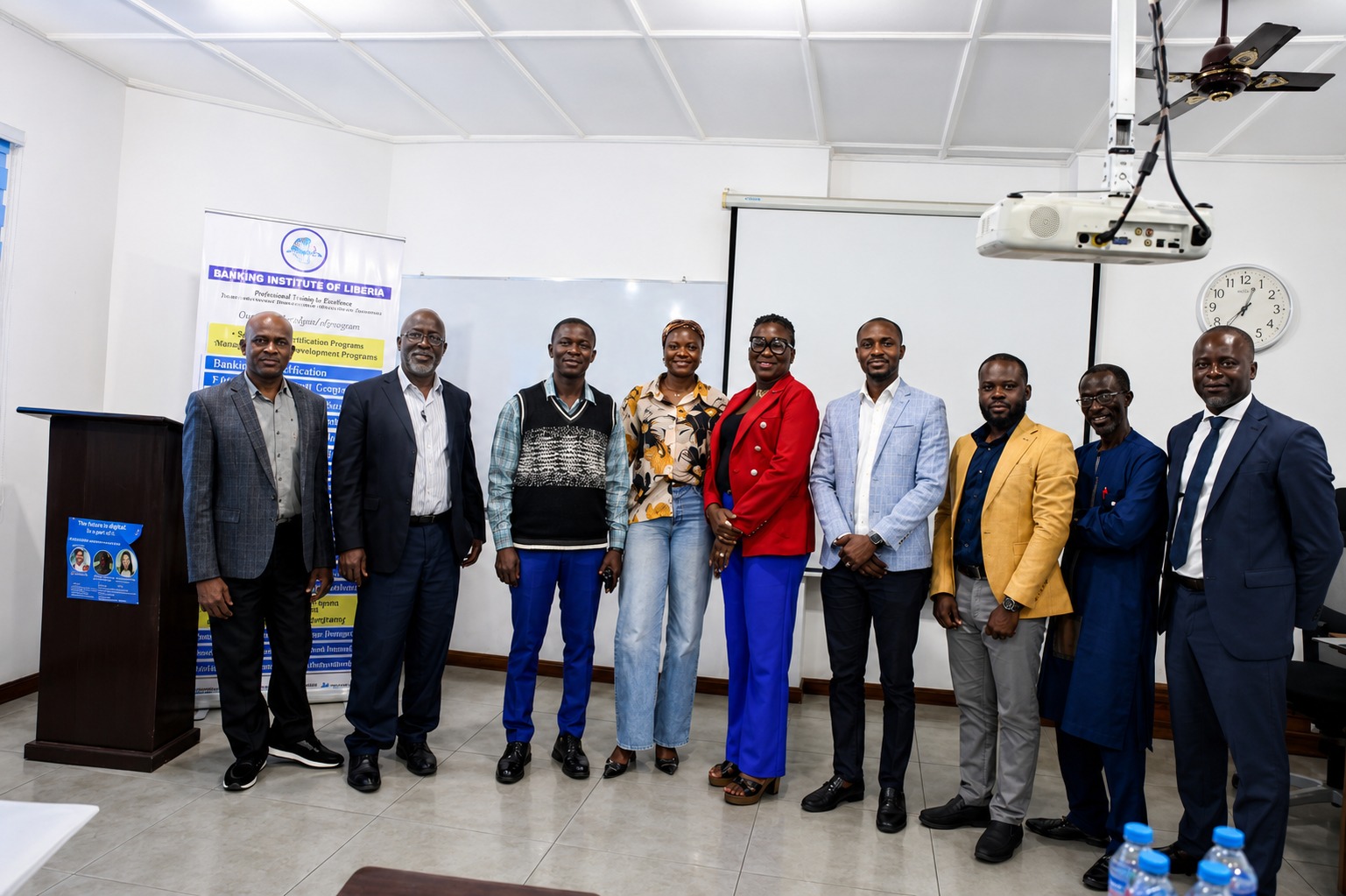
The Banking Institute of Liberia (BIL), in collaboration with BRIQX Group Ltd., has launched a national stakeholders’ consultation to support the development of Liberia’s first Real Estate Finance Certification Program. The initiative is designed to promote professionalism, enhance service delivery, and establish higher standards within Liberia’s rapidly expanding real estate and property industry. The consultation brought together stakeholders from government institutions, the banking sector, the Liberia Revenue Authority, academia, real estate firms, and the private sector. Participants were invited to provide recommendations for a certification program that reflects Liberia’s legal framework, economic conditions, and real estate market.
According to the organizers, the initiative is intended to address existing skills gaps in the sector while equipping professionals with specialized knowledge in housing, property investment, land development, property management, and real estate finance. The proposed certification program is the result of a partnership between a financial training institution and a private real estate company. The collaboration seeks to establish a locally developed curriculum that responds to Liberia’s specific needs rather than relying heavily on foreign training models.
Speaking during the opening of the consultation, BIL Director General Assistant Professor Richard S. Panton emphasized the importance of educational institutions responding to emerging national needs through practical and relevant professional training. Professor Panton said Liberia’s growing housing and real estate sectors require competent professionals with specialized skills to contribute to sustainable development. He noted that while many Liberians have ventured into real estate through experience and personal interest, access to structured professional training in the sector has remained limited.
He explained that discussions between BIL and BRIQX led to the decision to jointly establish a certification program tailored to Liberia. However, he stressed that meaningful stakeholder involvement is necessary to ensure that the curriculum addresses the realities and demands of the industry. “This program should become Liberia’s own,” Professor Panton said, encouraging stakeholders to offer recommendations that would contribute to the development of a practical, effective, and nationally relevant professional training program. Meanwhile, BRIQX Group Ltd. Director Osman Nyei highlighted the growing need for specialized education as Liberia’s real estate market continues to develop.
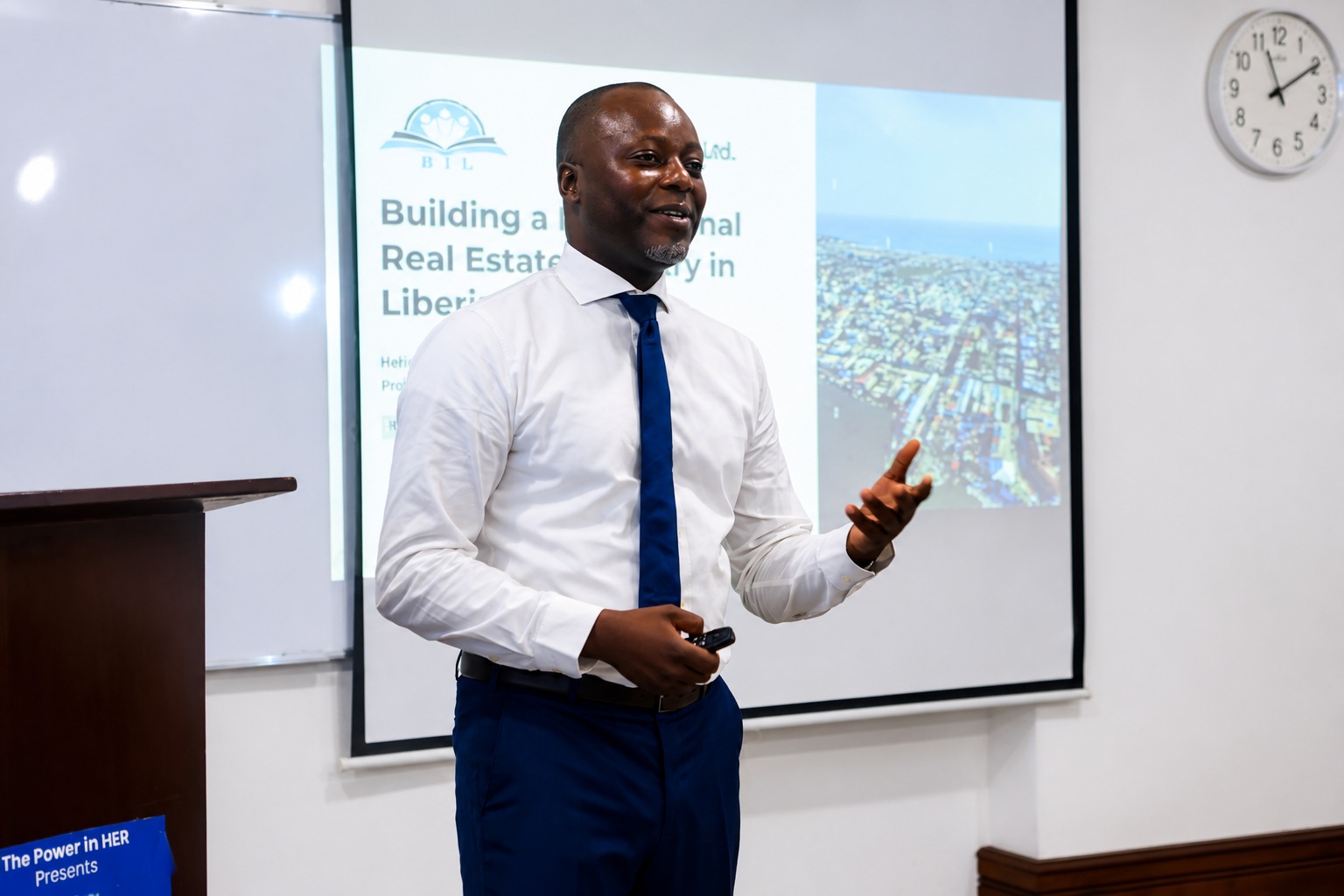
Nyei said the proposed program will equip participants with practical skills in real estate finance, investment analysis, property management, valuation, professional ethics, customer relations, and regulatory compliance. He noted that a professionally trained workforce could improve service delivery, strengthen public confidence, minimize disputes, attract investment, and promote greater transparency within the sector. Nyei encouraged students, financial professionals, entrepreneurs, developers, land administrators, and prospective real estate practitioners to consider enrolling once the program is launched. He described professional education as an investment that can contribute to both individual career advancement and national economic development.
During the consultation, participants reviewed proposed curriculum areas, ethical standards, financing options, certification requirements, and strategies for ensuring that graduates gain practical industry experience. Stakeholders recommended courses covering land governance, property law, mortgage financing, investment and risk management, digital property technology, customer service, and environmental sustainability. They also emphasized the importance of combining classroom-based learning with practical field exposure. Participants further underscored the strong connection between the banking and real estate sectors, noting that improved knowledge of property finance could strengthen mortgage lending, encourage investment, and support the development of a more stable property market.
Organizers described the initiative as timely, citing Liberia’s increasing urbanization, rising demand for housing, and renewed investment in infrastructure. They expressed the belief that a professionally trained workforce could help rebuild public confidence in the real estate industry while supporting broader economic growth. Recommendations gathered during the consultation will guide the next stage of curriculum development ahead of the formal launch of the certification program.
At the conclusion of the forum, BIL and BRIQX reaffirmed their commitment to establishing a certification program that meets international standards while remaining responsive to Liberia’s unique realities. The institutions also called on stakeholders and prospective students to support the initiative, expressing confidence that it could mark an important step toward creating a more professional, transparent, and sustainable real estate industry in Liberia.
Join The Discussion